
Published on December 10, 2025 at 15:55 PM | Category: Nursing
New Research Highlights Growing Role of NLP in Nursing — Unlocking Insights from Clinical Notes
Recent research shows NLP is increasingly used to analyze nursing notes and clinical records. A 2023 review identified 43 nursing-focused NLP studies; follow-up studies in 2024–25 extend applications to medication safety and adverse-event detection. The technology could soon transform documentation and decision support in nursing — but more nursing-specific work is needed.
Subscribe Now
December 10, 2025
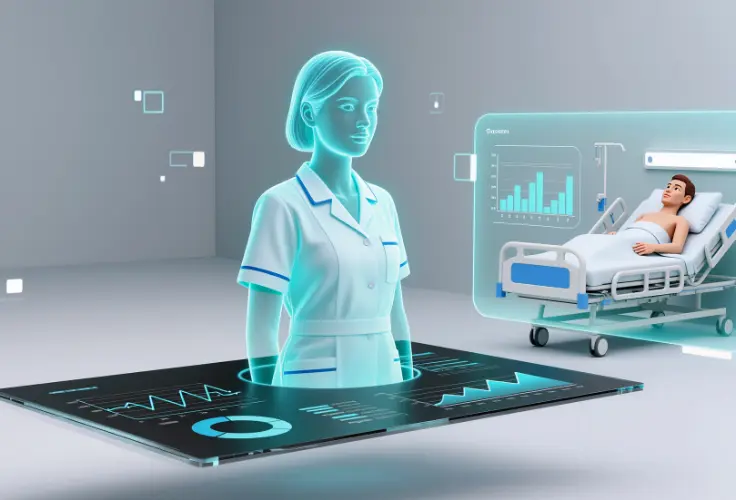
Recent findings underscore how Natural Language Processing (NLP) is rapidly emerging as a powerful tool in nursing and clinical care. A 2023 integrative review published in Computers, Informatics, Nursing — titled “Natural Language Processing of Nursing Notes: An Integrative Review” — examined nearly 700 candidate studies and identified 43 that specifically applied NLP to nursing notes.
The review shows that while healthcare NLP has proliferated, nursing-specific applications remain limited — making up only 1.7% of sampled NLP studies. Still, the trend is growing, especially in recent years, with many studies leveraging NLP for tasks such as symptom identification, risk prediction, and extracting meaningful insights from free-text clinical documentation.
New research from 2024–2025 shows that NLP and machine learning can spot harmful medicine reactions more accurately. They do this by reading the written notes in hospital records—things like nurses’ and doctors’ comments—which often reveal problems that regular computer systems miss.
These advances suggest that NLP could soon become a core component in nursing workflows supporting faster chart summarization, early detection of patient deterioration, improved medication safety, and better extraction of clinical insights from narrative notes.
However, researchers caution that more work is needed. Key gaps include:
- Limited use of nursing-specific terminologies (most studies rely on general medical vocabularies).
- Many studies lack comprehensive performance metrics (e.g., only ~61% of applicable studies reported full evaluation scores).
- Most research is based on inpatient data; other care settings (outpatient, home health, pediatric) remain underrepresented.
As hospitals worldwide advance digital health and Electronic Health Record (E H R) adoption, NLP offers the potential to transform nursing documentation and patient-care processes — making nursing documentation smarter, faster, and more data-driven.

By John B Pattassery
Marketing Coordinator, MWT Consultancy
What do you think?
Post a comment.
No comments yet. Be the first to comment!
England's social care workforce is showing signs of slower growth, wit
2 weeks ago
The NMC will introduce new quality reviews for nursing and midwifery e
2 weeks ago
A coordinated effort involving the Welsh Government, universities and
3 weeks ago
Health New Zealand is expanding its healthcare workforce with 380 addi
4 weeks ago

NSW Health is expanding its Safe Staffing Levels program beyond emerge
1 month ago

ALL COMMENTS - 0